Significant Cost Savings
Doing everything at once is often cheaper than several smaller projects spread over years. When you remodel the whole house, you benefit from the economy of scale:
- Mobilization Fees: Every time a contractor sets up a site, they charge for “mobilization”—bringing in equipment, protecting floors, and setting up debris bins. Doing this once instead of five times saves thousands.
- Crew Efficiency: Carpenters, plumbers, electricians, drywall installers and other tradespeople will likely already be in your home. Adding scope while they’re already working is much less expensive then sending them out for multiple projects.
- Permitting: Consolidating your entire project scope into single permits significantly reduces fees and avoids the redundant costs of filing multiple times.

Design Continuity and Flow
One of the biggest risks of room-by-room renovation is the “patchwork” effect. Styles change, and products go out of stock.
- Consistent Finishes: If you renovate the kitchen in 2026 and the guest bath in 2028, the specific wood grain or tile dye lot you used may no longer be available.
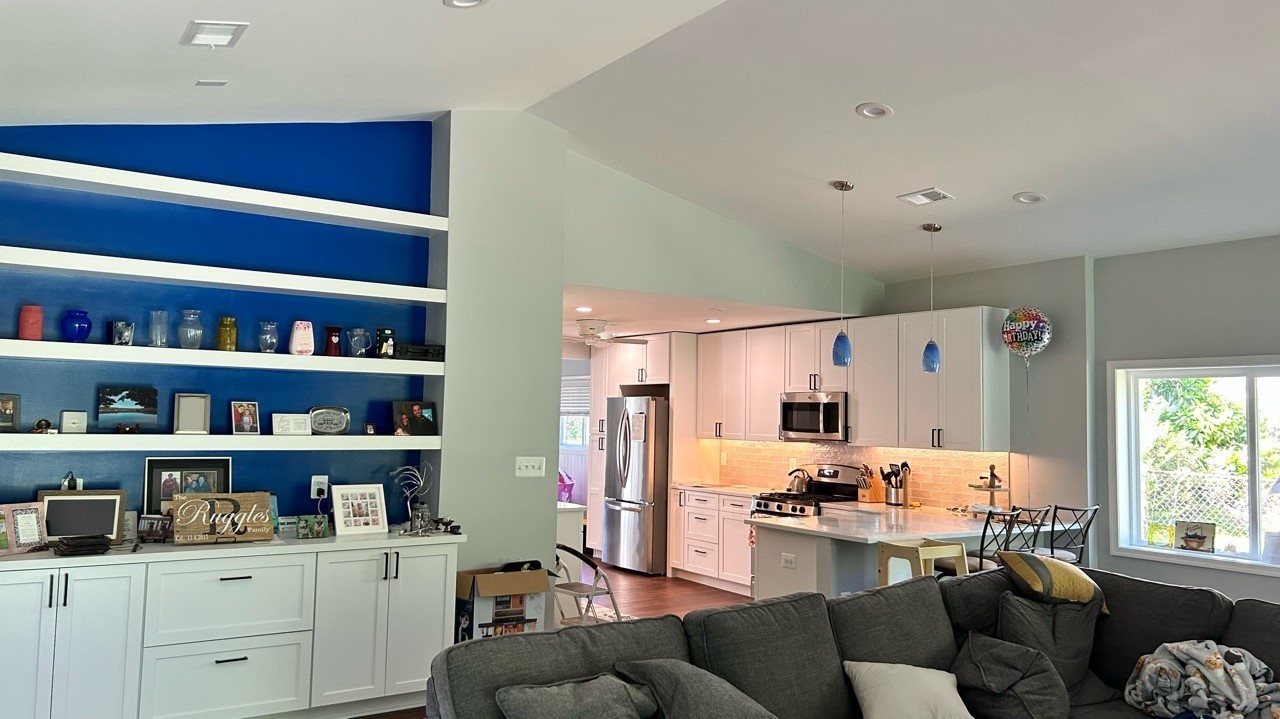
- Architectural Harmony: A whole-home remodel allows for a unified vision. You can ensure that the transition from the living room to the hallway feels intentional, with matching trim, consistent floor levels, and a cohesive color palette that flows naturally.
Structural and Mechanical Synergy
Homes are complex systems where the “bones” are interconnected.
- The “Behind the Walls” Logic: If you’re opening up a wall in the kitchen to update the plumbing, it is the perfect time to address the adjacent bathroom or the HVAC venting upstairs.
- Future-Proofing: Renovating all at once prevents the frustration of having to tear into a “finished” room because you realized you needed to run a new electrical line or pipe through it for a later project.

Reduced Long-Term Stress
While a whole-home renovation is undeniably intense, it effectively consolidates “construction fatigue” into a single, manageable window of time. Choosing a comprehensive approach over a piecemeal one can significantly protect your long-term peace of mind.
- Room-by-Room: Taking a room-by-room approach often stretches the timeline over several years, creating a sense of living in a permanent construction zone. This method leads to a cycle of constant dust, noise, and the recurring presence of contractors in your private space every few months, making it difficult to ever truly feel settled.
- Whole-Home: In contrast, a whole-home renovation typically lasts between 3 to 8 months. While the intensity is higher, it offers a definitive finish line. By often moving out briefly, you trade a few months of temporary displacement for a clean, cohesive finish—allowing you to return to a fully completed home without the looming stress of the “next” project.
Higher Immediate ROI
If you plan on selling or simply want to enjoy the maximum value of your investment, a fully finished home hits the market (and the appraisal) much harder than a partially updated one. A home that is “done” appeals to a wider range of buyers and eliminates the “work-in-progress” stigma that can stall a sale.
The Bottom Line
Tackling a whole-home remodel requires more upfront capital and a temporary lifestyle shift, but the rewards are a shorter construction timeline, lower total costs, and a harmonious living space that feels like a brand-new house rather than a collection of mismatched projects.